
Narrow it down
What this symptom can tell you
The dryer is hot but clothes stay damp
Restricted exhaust airflow, an oversized load, or wet clothes entering from the washer may be the main issue.
Drying improves with a smaller load
The load may be too large or dense for air to circulate effectively.
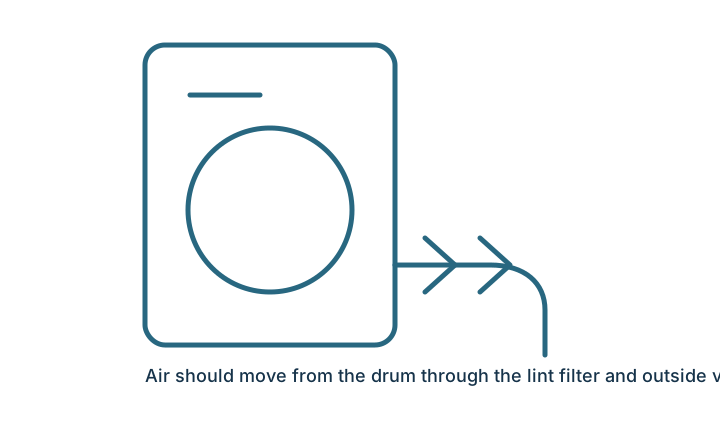
The exterior vent has weak airflow
The transition duct or building exhaust path may be restricted and should be corrected safely.
These patterns narrow the next check; they do not confirm a failed part. Use the exact model number and any displayed code before ordering parts or authorizing repair.
Try these checks in order
Exact controls and access points differ by model. Stop when a step does not match your appliance or manual.
- 1
Clean the lint screen
Remove all lint and wash residue from the screen only as the manual directs.
What you want: Light passes through the clean screen. - 2
Check exterior airflow
Run the dryer and confirm the outside vent hood opens with a strong stream of air.
What you want: Airflow is steady and the hood is clear. - 3
Use smaller, matched loads
Mixing towels with light items or overfilling the drum increases time.
What you want: Items can separate and tumble. - 4
Use a higher washer spin
A washer that leaves clothes very wet makes the dryer work longer. Select a suitable higher spin for sturdy fabrics.
What you want: Clothes enter the dryer damp, not dripping. - 5
Check the cycle sensor area
Clean only the visible sensor bars listed in the manual, usually inside the drum near the lint screen.
What you want: The bars are clean and dry.
Most common categories
Possible causes to consider
- A lint screen coated with lint or residue.
- A crushed, kinked, overly long, or blocked exhaust path.
- An overloaded drum or mixed heavy and light fabrics.
- A washer that leaves clothes unusually wet.
- A heater, burner, moisture sensor, thermostat, blower, or control issue requiring service.
Stop and arrange help when
- The dryer or laundry room becomes unusually hot.
- There is a burning smell, smoke, or scorched lint.
- The exterior vent has little airflow after visible lint is removed.
- The vent runs through an inaccessible wall and may be blocked.
If the problem remains
Find the full model number. Open the official manual, check for a recall, and describe which checks you completed before contacting service.
Outcome check
Did these checks resolve the problem?
Your answer helps identify which guides need improvement. No appliance details are submitted.
Common questions
Dryer takes too long to dry: FAQs
Why does my dryer need two cycles?
Restricted airflow is a common reason, but load size, fabric mix, washer spin, heat level, and sensor settings also matter. Compare with one normal medium load.
How can I check dryer vent airflow safely?
With the dryer running on a normal heated cycle, observe the exterior vent from outside without removing guards. Weak or absent airflow needs professional vent inspection.
Can dryer sheets affect the lint screen?
Some products can leave residue on certain screens. Clean the screen only as the dryer manual directs and make sure it is completely dry before reinstalling.
Research and verification
Source basis
This general guide was reviewed against official manufacturer support libraries and safety guidance. Exact controls, access points, installation limits, and reset procedures vary by model; the manual for your exact model takes priority.
- U.S. CPSC: overheated clothes dryers can cause fires
- Whirlpool Product Help: dryers
- Official manual directory
See something unclear or incorrect?
Send the page link, appliance model, and the detail that needs review.