
Narrow it down
What this symptom can tell you
The drum turns but air stays cold
A no-heat cycle, incomplete electrical supply, closed gas supply, or an internal heating fault may be involved.
Heat appears briefly and then disappears
Restricted airflow, overheating protection, or a temperature-control issue may be involved.
The dryer is warm but clothes remain wet
The main problem may be airflow, load size, or washer spin performance rather than no heat.
These patterns narrow the next check; they do not confirm a failed part. Use the exact model number and any displayed code before ordering parts or authorizing repair.
Try these checks in order
Exact controls and access points differ by model. Stop when a step does not match your appliance or manual.
- 1
Check the cycle and temperature
Air Dry, Fluff, and some delicate cycles use little or no heat. Choose a normal heated cycle that is safe for the fabric.
What you want: A heated cycle is selected. - 2
Clean the lint screen
Remove lint before every load and reinstall the screen fully. Do not run the dryer without it.
What you want: The screen is clean and undamaged. - 3
Check the outside vent
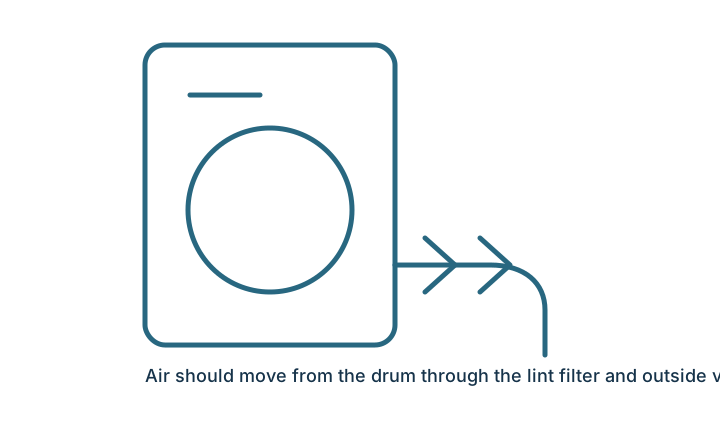
While the dryer runs, look for strong airflow at the exterior hood. Keep hands away from hot metal and moving flaps.
What you want: The hood opens and warm air exits freely. - 4
Reduce the load
A packed drum limits airflow. Dry a smaller load of similar fabrics.
What you want: Items can lift and tumble. - 5
Check electric dryer power
Electric dryers can tumble with only part of the required power. Reset the double breaker once. Do not open the outlet or terminal cover.
What you want: Both breaker poles remain on.
Most common categories
Possible causes to consider
- An Air Fluff, No Heat, Eco, or delicate setting.
- One side of the electrical supply interrupted on an electric dryer.
- A closed gas valve or gas-supply issue on a gas dryer.
- A blocked lint screen, crushed transition duct, or restricted exterior vent.
- A heater, igniter, fuse, thermostat, sensor, wiring, or control issue requiring service.
Stop and arrange help when
- You smell gas. Leave the area and contact the gas utility or emergency service.
- There is smoke, a burning smell, scorched lint, or a hot cord.
- The vent is crushed, disconnected, or blocked inside a wall.
- The breaker trips again or heating requires panel removal.
If the problem remains
Find the full model number. Open the official manual, check for a recall, and describe which checks you completed before contacting service.
Outcome check
Did these checks resolve the problem?
Your answer helps identify which guides need improvement. No appliance details are submitted.
Common questions
Dryer not heating: FAQs
Can an electric dryer run with a partial power problem?
Yes. Some electric dryers can tumble while the heating circuit lacks the full supply. Check the breaker only from the panel; do not test live wiring yourself.
Does a clogged vent cause no heat?
Restricted airflow more often causes poor drying or cycling heat, but it can also trigger over-temperature protection. Stop if the dryer becomes unusually hot.
Should I keep running the dryer to test it?
Use only one short, supervised test after the visible checks. Stop for burning odor, smoke, repeated breaker trips, or excessive cabinet heat.
Research and verification
Source basis
This general guide was reviewed against official manufacturer support libraries and safety guidance. Exact controls, access points, installation limits, and reset procedures vary by model; the manual for your exact model takes priority.
- U.S. CPSC: overheated clothes dryers can cause fires
- Whirlpool Product Help: dryers
- Official manual directory
See something unclear or incorrect?
Send the page link, appliance model, and the detail that needs review.