
Narrow it down
What this symptom can tell you
Both refrigerator and freezer are warm
Power, settings, door closure, a recent outage, airflow, or a system fault may be involved.
The freezer is cold but the refrigerator is warm
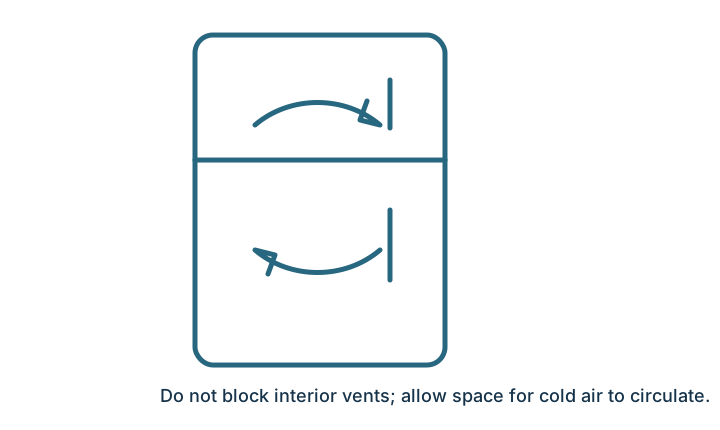
Cold-air movement between compartments may be restricted. Use the dedicated airflow guide.
The unit runs constantly but temperature rises
Door sealing, room conditions, blocked airflow, frost, or a refrigeration-system issue may require service.
These patterns narrow the next check; they do not confirm a failed part. Use the exact model number and any displayed code before ordering parts or authorizing repair.
Try these checks in order
Exact controls and access points differ by model. Stop when a step does not match your appliance or manual.
- 1
Check the displayed temperature
Set the refrigerator near 37 F and freezer near 0 F unless the manual specifies differently. Allow time after a change.
What you want: The controls show a normal target temperature. - 2
Close the doors fully
Move packages away from vents and door bins. Clean visible debris from the gasket.
What you want: Doors close by themselves from a small opening and seals touch evenly. - 3
Clear interior air vents
Do not pack food against the vents between the freezer and fresh food sections.
What you want: Cold air can move around shelves and drawers. - 4
Check room and installation conditions
Very hot garages, direct sun, or no clearance around the cabinet can reduce performance. Follow the installation guide.
What you want: The appliance has the required ventilation space. - 5
Vacuum only owner-accessible exterior dust
If the manual identifies an accessible toe grille or rear cover-free condenser area, remove surface dust with power disconnected. Do not remove panels.
What you want: Accessible airflow openings are clear.
Most common categories
Possible causes to consider
- Interrupted power, a tripped breaker, or controls set incorrectly.
- A door not closing fully or a visible gasket obstruction.
- Food packages blocking internal air vents.
- Recent installation, loading, defrost, or power restoration requiring stabilization.
- A fan, sensor, defrost, compressor, refrigerant, wiring, or control issue requiring service.
Stop and arrange help when
- Food has been above 40 F for an uncertain or extended time. Follow official food safety guidance.
- There is a burning smell, smoke, or repeated breaker trip.
- The compressor area clicks repeatedly or becomes extremely hot.
- Cooling work would involve refrigerant, sealed tubing, or electrical panels.
If the problem remains
Find the full model number. Open the official manual, check for a recall, and describe which checks you completed before contacting service.
Outcome check
Did these checks resolve the problem?
Your answer helps identify which guides need improvement. No appliance details are submitted.
Common questions
Refrigerator not cooling: FAQs
How long should a refrigerator take to cool after power returns?
Recovery time varies by model, room temperature, food load, and how long the doors were open. Protect food according to official food-safety guidance rather than waiting without checking.
What temperature should a refrigerator be?
Use an appliance thermometer and follow current food-safety guidance. In Canada and the United States, 4°C or 40°F or below is the common refrigerator safety target.
Should I unplug and restart a warm refrigerator?
Use only the reset procedure in the model manual. Repeated unplugging can delay diagnosis and does not correct airflow, sealing, or system faults.
Research and verification
Source basis
This general guide was reviewed against official manufacturer support libraries and safety guidance. Exact controls, access points, installation limits, and reset procedures vary by model; the manual for your exact model takes priority.
- FoodSafety.gov: food safety during a power outage
- Whirlpool Product Help: refrigeration
- Official manual directory
See something unclear or incorrect?
Send the page link, appliance model, and the detail that needs review.